Places to visit during Char Dham Yatra
The Char Dham Yatra Package mainly connects Yamunotri, Gangotri, Kedarnath, and Badrinath. The trek across the state’s Himalayas in Uttarakhand boasts several cultural, mythological, and natural tourist spots that complement the spiritual journey. The itinerary underlines some of the key additional places that travellers visit, which often have high religious or scenic significance, turning the devotees into a comprehensive one. The four dhams pass through temples, confluence places also known as Prayags, historic villages and magnificent views. These auxiliary locations add context to the region’s mythology, provide spiritual diversity, and break up the long driving days. From tranquil hillside communities to ancient temples and gorgeous valleys, these destinations transform the “Char Dham Yatra” into a fully immersive Himalayan experience.
10 Top Places To Visit During Char Dham Yatra:
Mussoorie –
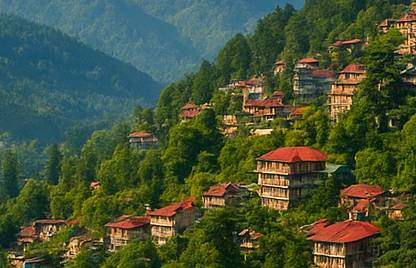
Mussoorie has become a common stopover en route to the first climb into the Garhwal Himalayas and is correctly known as the “Queen of the Hills.” Although not a holy site, the height and cool atmosphere offer a haven for rest. Travellers commonly devote a few hours to the famous Kempty Falls before continuing to Barkot. Mussoorie serves as a good break between the plains and the strenuous mountain roads and helps in first acclimatization.
Janki Chatti –
Janki Chatti is the main logistical starting point for the Yamunotri pilgrimage. It lies at an altitude where the road terminates, and the 6 km trek to the Yamunotri temple begins. It is renowned for its hot springs, which are believed to possess therapeutic value. Many pilgrims halt here or at nearby Barkot, and use this place to hire ponies or Dolis for the trek or simply for relaxation before the arduous climb.
Hanuman Chatti –
Hanuman Chatti is a settlement, stands very close to the conjunction of the Hanuman Ganga and the Yamuna Rivers. Traditionally, it was an important resting point and the starting point of the trek to Yamunotri prior to the road being extended to Janki Chatti. It is believed to be a religious site because of a small temple devoted to Lord Hanuman. Even though modern-day travel often bypasses it, one of the historic confluences and is worshipped by many pilgrims.
Vishwanath Temple –
Uttarkashi is a famous town located on the banks of the Bhagirathi River. Kashi Vishwanath Temple is among the major attractions of the city. The presiding deity of this ancient temple, located here, is Lord Shiva. The temple is considered as sacred as the most famous Kashi Vishwanath Temple at Varanasi, hence the name “Kashi of the North.”
Harsil Valley –
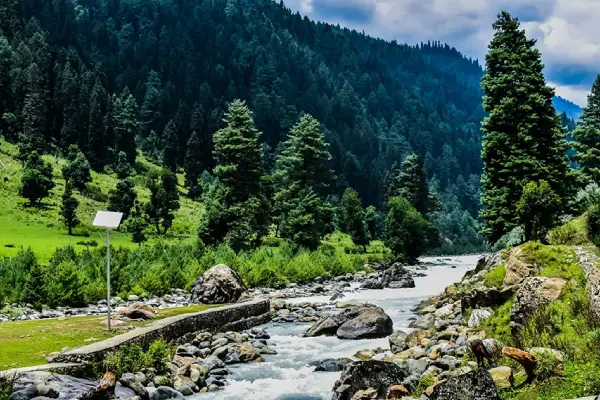
Harsil Valley is famous for its unmatched scenic beauty. At an altitude of around 2620 meters above sea level, this place lies amidst lofty snow-capped hills and dense forests of Deodar and Pine. The valley is known for its extensive apple orchards and is even regarded as the most beautiful stop on the Char Dham Yatra.
Mukhwa Village –
Mukhwa or Mukhba Village has great religious importance because it contains the winter residence or winter seat of Goddess Ganga. During the time when the Gangotri temple is closed during winter due to heavy snowfall, the idol of Goddess Ganga is taken down to the hamlet of Mukhwa, and the daily devotion continues. Exploring this small community sheds light on the practical and spiritual continuity of the trip throughout the year.
Ardhanarishvara Temple –
Guptkashi is the most important hamlet in the Mandakini River valley and acts as the chief starting point for the Kedarnath trek. The Ardhanarishvara Temple here holds a great reputation. In this idol, there’s a unique form of Shiva, representing the unification of Shiva-man energy and Parvati female energy, and it is a personification of the universe’s harmonious duality. The shrine offers a spiritual rest before the tough Kedarnath trip.
Triyuginarayan Temple –
Among the places here, the Triyuginarayan Temple holds the highest mythological significance. According to the Hindu mythology, it is considered the sacred place where Lord Shiva and Goddess Parvati married each other. It is believed that Lord Vishnu solemnized their marriage, and the sacrificial fire of the temple has continuously been burning since then, in the Treta Yuga.
Omkareshwar Temple –
The Omkareshwar Temple in Ukhimath is the winter abode of Lord Kedarnath and Lord Madhyamaheshwar. During the winter season, when the Kedarnath temple is inaccessible, the Utsav Murti or the professional idol, ritually goes to Ukhimath and is worshipped for six months. A trip is necessary to appreciate the seasonal nature of Char Dham worship.
Tungnath Temple –
Tungnath Temple is the highest Shiva temple in the world and the third among the five Panch Kedars. The visit here requires a separate trip of 3.5 km from Chopta is generally known as “Mini Switzerland.” Although not part of the Chardham yatra, it is an important pilgrimage destination. It offers tremendous 360-degree views of the Himalayan peaks, attracting devotees who want extra challenge and spiritual gain.
Conclusion –
While Char Dham’s of Uttarakhand are the four prime dhams, the real nucleus of the tour lies in its trek across the holy environment that interconnects them. Natural beauty abounds in the Harsil valley, some offer an immersion in deep mythology and spiritual history.